When someone shares your exclusive content on X without permission, it can spread faster than almost anywhere else on the internet. A single retweet can put your work in front of thousands of people who never paid for access, and the platform's open structure means screenshots and videos move from account to account before you even know it happened. For creators who rely on subscription income, every unauthorized share cuts into the trust you've built with your audience and the revenue that supports your work.
X does honor DMCA takedown requests, but the process requires you to identify exactly which posts contain your content, fill out their copyright form correctly, and often reveal your legal name in the process. Many creators hesitate because filing a notice can expose personal information to the same users who stole their content in the first place. Meanwhile, copies of the infringing post may already be circulating in quote tweets or as screenshots on other platforms, meaning even a successful takedown doesn't always stop the spread.
Before you start
Do not delete your evidence. Screenshot the page showing your content, copy the exact URL of every infringing item, and note the date. A takedown notice that points at a vague "your website" gets rejected; one that lists precise URLs gets actioned.
The biggest challenge with X is speed and scale. Our scanners have recorded 44 separate infringing items on this domain, and that's only what we've detected—the actual number of unauthorized shares is likely higher because content gets deleted, accounts get suspended, or posts go private before they're logged. Even when you locate an infringing post and submit a takedown request through X's official process, the platform's review times can vary, and there's no guarantee the user won't repost your content from a different account. The sheer volume of activity on X makes it difficult to stay ahead of leaks manually, especially when new violations appear while you're still working to remove the old ones.
Who to send the notice to
For x.com, these are the parties responsible for the content:
- X (Twitter) — Social Media, accepts notices by email.
What a valid DMCA notice must contain
Under 17 U.S.C. § 512(c)(3), a takedown notice is only legally effective if it includes all of the following. Notices missing any element are routinely ignored, and the site is within its rights to do so.
- Your physical or electronic signature.
- Identification of the copyrighted work being infringed.
- The exact URL of each infringing item on x.com.
- Your contact details — address, telephone number, and email.
- A statement that you have a good-faith belief the use is not authorised.
- A statement, under penalty of perjury, that the information is accurate and that you are the copyright owner or authorised to act for them.
That sixth point is the one creators most often get wrong. "Under penalty of perjury" is not decorative language — leaving it out gives the recipient a clean reason to reject the notice.
A note on your privacy
A DMCA notice requires a legal name and address, and that notice may be forwarded to the person who uploaded your content. Many creators are, reasonably, not willing to hand their real identity to whoever is distributing their work. Filing through an agent avoids this: the agent's details go on the notice instead of yours.
When the first notice is ignored
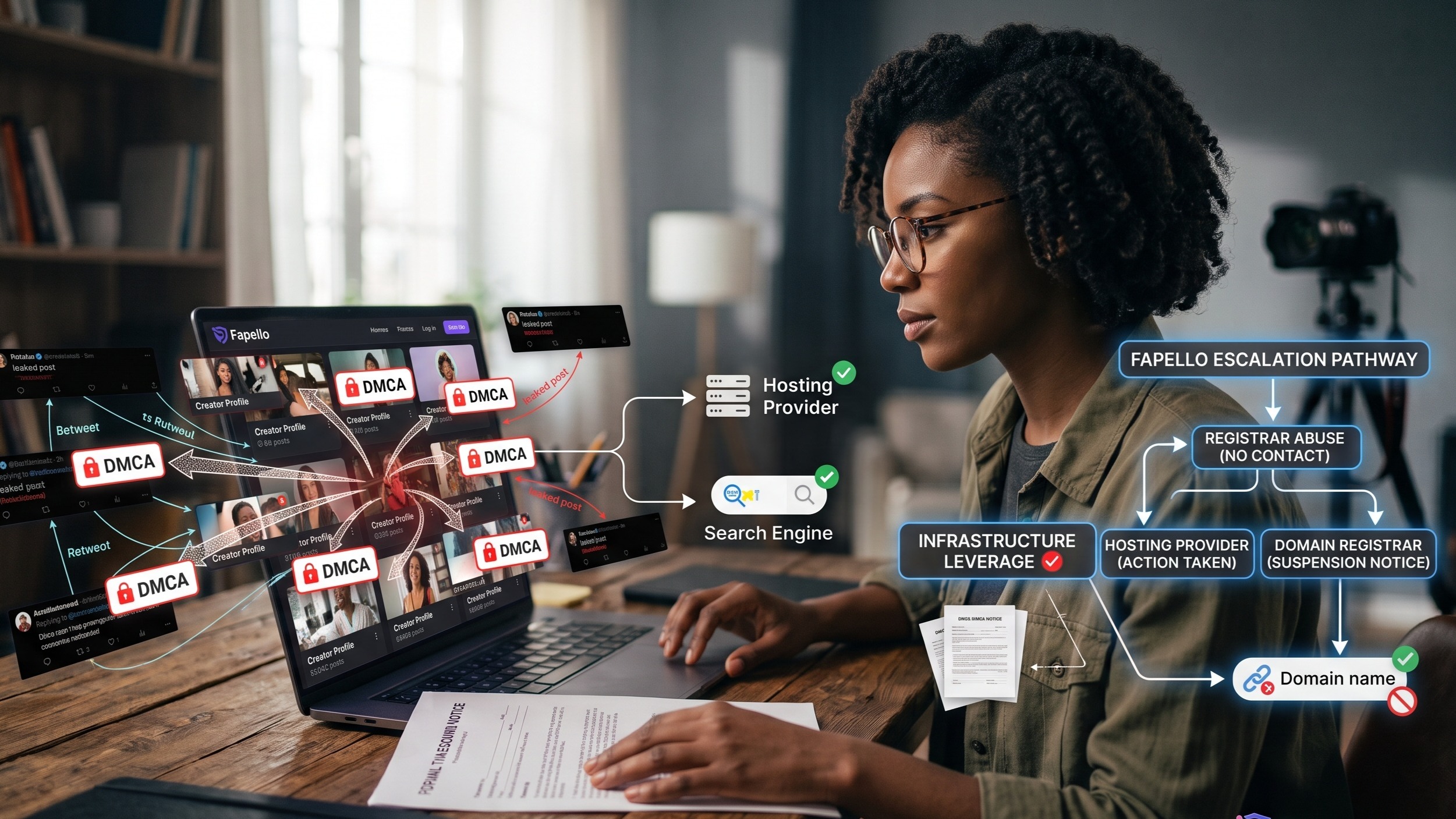
If X doesn't respond to a properly filed DMCA notice within a reasonable time—or if the same content keeps reappearing from new accounts—escalation becomes necessary. That can mean reaching out to X's designated DMCA agent with follow-up documentation, or in some cases working with legal counsel to apply additional pressure through formal channels. Escalation works because platforms like X have legal obligations under the DMCA's safe harbor provisions, and they risk losing those protections if they ignore valid takedown requests or allow repeat infringers to operate freely. If nothing happens, work up the chain — each step reaches a company with more to lose than the last:
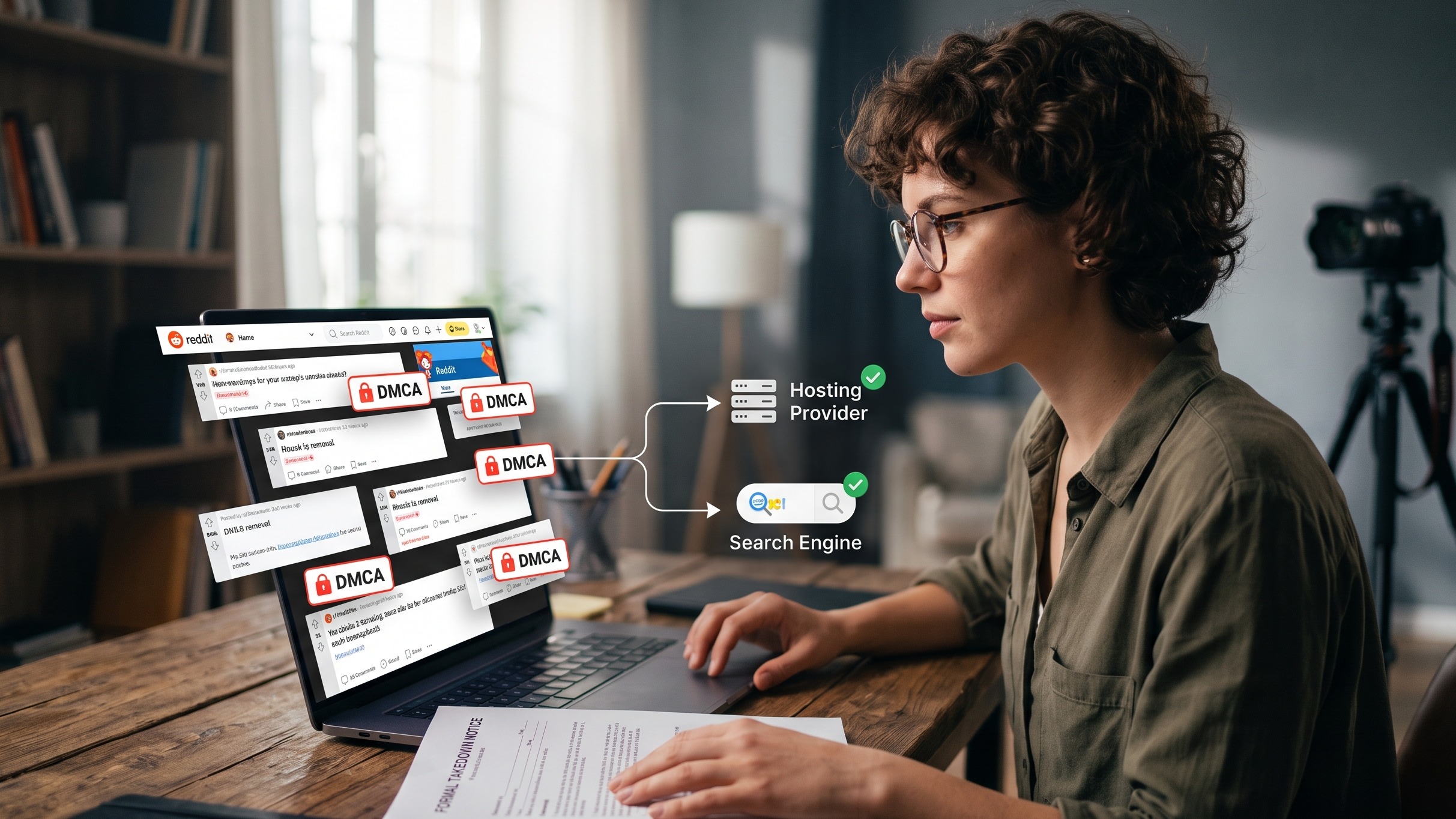
- Hosting provider. Hosts risk their safe-harbour protection if they ignore valid notices, so they tend to act.
- CDN. Providers like Cloudflare will not remove content themselves, but they will forward the notice and disclose the origin host.
- Domain registrar. Registrars can suspend the domain entirely.
- Search engines. A separate notice to Google delists the page, which removes most of the traffic even while the page technically remains up.
- Payment processors. If the site takes payments, its processor has strict rules about infringing and non-consensual content.
Most creators stop after step one. Steps two through five are where results actually come from.
Getting help with this
CreatorDefense handles the entire process so you don't have to monitor X yourself or risk exposing your identity. Our system continuously scans for copies of your content across the platform, drafts the takedown notices using the correct legal language, and submits them from our own registered DMCA agent—keeping your name out of the paperwork. When a notice goes unanswered or the same content reappears, we escalate automatically through the appropriate channels, so nothing falls through the cracks while you focus on your work.
You can look up the takedown contact for any URL for free, no account needed.
This article is general information, not legal advice. For advice about your specific situation, consult a qualified lawyer.